
Waterproof Membrane Systems for Low-Slope Applications
Flat & Low-Slope Roofing in Louisburg for additions, porches, and commercial structures where standing water and membrane failure create recurring leaks
United Contracting installs TPO and EPDM membrane systems on flat and low-slope roofs across Louisburg that cannot shed water as quickly as steep residential roofs. You need this service when you notice pooling water that lasts more than forty-eight hours after rain, when seams in the existing membrane pull apart, or when blisters and cracks appear across the roof surface. The work creates a continuous waterproof layer that resists ponding, reflects heat, and protects the structure underneath from moisture damage.
TPO membranes use heat-welded seams that fuse into a single watertight sheet, while EPDM relies on adhesive or mechanical fasteners with seam tape to join rolled sections. Both materials handle the freeze-thaw cycles and humidity common in North Carolina, and both come in widths that minimize the number of seams across the roof plane. Reflective white TPO reduces cooling costs by bouncing sunlight away from the building, making it a common choice for additions and light commercial applications where energy efficiency matters.
If your flat or low-slope roof leaks after every storm or shows visible damage across the membrane surface, schedule an inspection and receive a system recommendation tailored to your roof layout and drainage conditions.
How Membrane Installation Works and What Improves Afterward
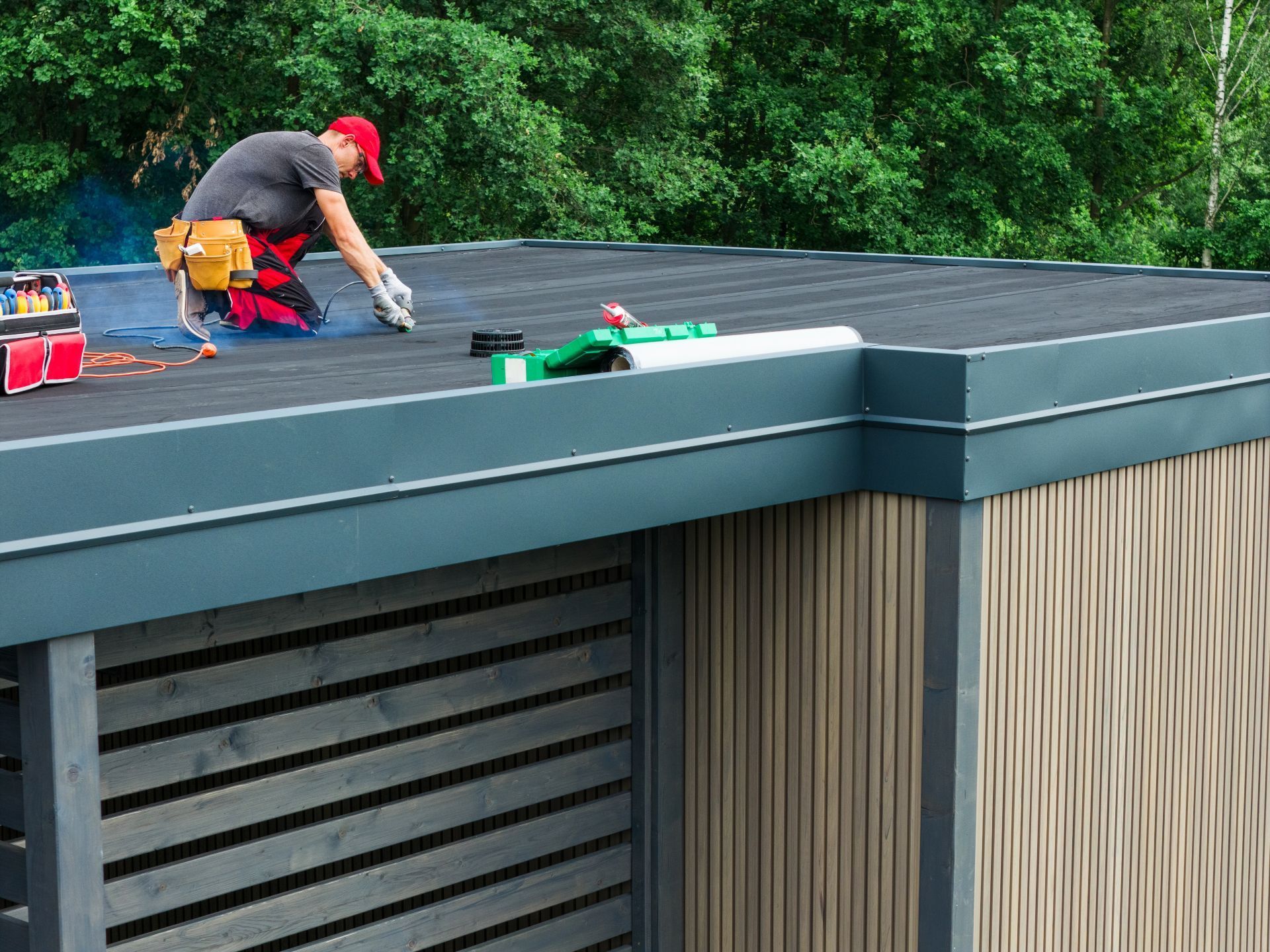
Your inspection measures roof area, documents drainage slope, and identifies any low spots where water collects. United Contracting removes the old membrane if it no longer bonds to the substrate, checks the decking for rot or soft spots, and installs rigid insulation board if the project includes an energy upgrade. The new membrane rolls out in sections, and seams join using a hot-air welder for TPO or primer and seam tape for EPDM. Flashing wraps around roof penetrations such as vents and HVAC units to prevent water from entering at those transition points.
After installation, you will see a smooth, uniform surface with no wrinkles or raised seams, and water will flow toward drains or scuppers without pooling in the center of the roof. The interior ceiling stays dry during heavy rain, and the risk of mold growth or insulation damage drops significantly. A well-installed membrane also improves the building's thermal performance by adding a reflective layer that lowers surface temperatures on sunny days.
Most flat roof projects finish within one to three days depending on roof size and the condition of the existing substrate. The service does not include structural repairs or the addition of new drains unless those items are specified separately, and it assumes the roof deck can support the weight of new insulation and membrane without additional framing.
Questions Homeowners Ask About Flat Roof Systems
Property owners in Louisburg often ask how long membrane roofs last, whether ponding water always means failure, and what maintenance keeps the system working.
How long does a TPO or EPDM membrane typically last in this climate?
You can expect fifteen to twenty-five years from a properly installed membrane if it avoids punctures and receives periodic inspections to catch small issues before they spread.
What causes ponding water on a flat roof, and does it always require rework?
Ponding happens when the roof lacks adequate slope to move water toward drains, and while occasional pooling is normal, standing water that lasts more than two days accelerates membrane breakdown and usually signals a drainage problem.
When should you repair a membrane versus replacing the entire roof?
If damage covers less than twenty percent of the surface and the rest of the membrane remains flexible and well-bonded, patching the affected areas extends the roof's life without the cost of a full tearoff.
Why does proper flashing matter so much on flat roofs?
Water moves slowly across flat surfaces, so any gap around vents, edges, or penetrations allows moisture to seep under the membrane and rot the decking before you notice interior damage.
What routine maintenance keeps a flat roof performing in Louisburg?
Clearing drains and scuppers twice a year prevents clogs that cause ponding, and inspecting seams after major storms catches small separations before they open wide enough to leak.
United Contracting uses manufacturer-approved installation methods and documents each step to ensure warranty coverage remains valid. If your flat or low-slope roof leaks or shows signs of membrane failure, request an inspection and system recommendation for your building in Louisburg.